Hidden Compost
Some necessary mowing and weeding
Vibrant Growth
It's time for a little bit of taming: late June, 2021
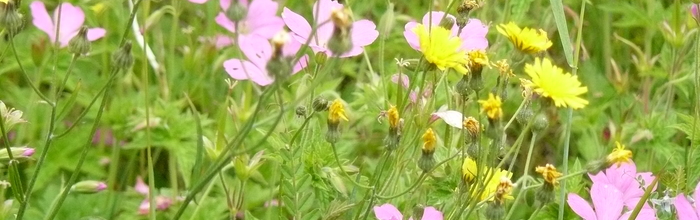
The late spring and early summer growth has produced grasses up to a metre tall, abundant flowers and plenty of weeds. The weeds, of course, are just those (hopefully) native plants that are best suited to the environment of the garden. Some are perennials which have lain dormant and hidden in the soil all winter. Others are new arrivals: annuals whose seeds have travelled in the air or the digestive tracts of birds and other animals.
A lazy wildlife gardener doesn't want to do too much weeding but some pruning and selective removal is necessary to maintain the definition of a garden.
Looking at what needed to be done, it seemed apt to mow the top two lawns. The bottom lawn, at the front, is left wild all summer so I just keep a few meandering paths cut through it. The aim is to have a genuine summer meadow but for that I'll either need to leave it a long time or actively try to reduce the grass. Sowing yellow rattle next winter is the plan.
There's not much lawn left at the very top as I've gradually eaten it away by creating new areas of beds. The middle lawn is the one that most closely resembles a lawn and is kept cut as such. Before starting on the lawns, though, I realised I needed to create an access route to the compost heap. Grass and nettle growth had completely obscured it.

Hidden Compost

Compost Heap Revealed
The container of my compost heap is made from bits of an old shed and, as shown in the photo, it's in need of quite a bit of patching up. The heap to the right of the compost container is a general weed heap. I created this when the local refuse site was closed during the main Covid lockdown in 2020 and have since continued to use it rather than carting ton bags of plant matter to the tip. Nature seems to do a very good job of rotting everything down in place.
Philosophy
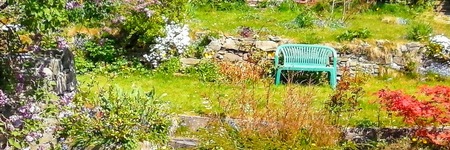
Almost all human activity is damaging to the environment and gardening is no exception. The most wildlife and planet-friendly garden is one in which you do nothing; just let nature gradually take back control. Brambles, nettles and eventually trees will take over. That, however, would no longer be a garden. It would be a re-wilded patch within whatever human settlement you happen to live in.
At the other extreme is the most human-tamed outside environment, a garden of decking, weed-suppressing membranes, concrete or stone. Just a little bit better for wildlife are gardens of carefully manicured lawns, neat borders and arrays of non-native shrubs and flowers.
The lazy wildlife gardener lives at the wild end of the spectrum. Being lazy (or just not having much time for gardening work) means leaving nature to its own devices for much of the time and in many places. Mowing and weeding are two practices that require a constant battle against nature. Many people appreciate the results of these battles but the lazy wildlife gardener would rather walk away from that fight.
The philosophy is one of tidying and weeding in the places where the gardener desires a particular plant to become established or where unruly growth would otherwise impede on the use of the outside space. Sticking to these principles means that a limited amount of mowing is required (for the grass areas that you want to use) and weeding and pruning occurs in moderation, as time and motivation allow.